
OPINION: Tennessee Must Follow Georgia’s Approach to School Safety
What we learned from the aftermath of Apalachee and how we implement a school safety standard.


Almost one year ago, the unimaginable happened at Apalachee High School in Winder, Georgia. A normal school day turned to chaos within seconds. Amid the terror, teachers pressed the small wearable panic alarms they had received just a week earlier. Those devices sent an immediate alert to the SRO on campus and local law enforcement, pinpointing the exact location of the crisis. Officers were at the scene in less than two minutes, while the rest of campus sheltered in place due to the campus-wide alert triggered by the panic buttons.
In the aftermath of the tragedy, it was clear that the panic alarms prevented additional loss of life through clear internal communication about protocols and external communication about the location and nature of the threat. Georgia lawmakers determined the safety of schoolchildren was not up for debate, and it was necessary to equip all classrooms with this kind of responsive technology.
Six months post-tragedy, the state legislature passed HB 268, known nationally as “Alyssa’s Law,” requiring panic alarm systems in every public school. The legislation provided over $100 million allocated in dedicated funding through school security grants. Through bipartisan efforts, representatives and senators agreed that students cannot learn if they feel unsafe in their classrooms. The State of Georgia took swift and decisive action fully funding and requiring these tools for every school.
Here in Tennessee, I have worked tirelessly with parents, students and educators to advocate for “Alyssa’s Law”. Two years ago, we passed the School Safety Alert Pilot Program, and now at least 15 districts have alert devices in place, including Putnam and Sullivan Counties. The results have been clear: these systems work, they save time, and they give teachers confidence that help will be there when they need it most.
We’ve lived our own tragedies. Nashville is still reeling from the tragic losses at the Covenant School and Antioch High School. Across the state, we’ve seen threats to schools dramatically increase. It is time that we follow in the footsteps of Georgia and other states across the nation.
Recent cell phone bans enacted across classrooms statewide have made it even more urgent to provide streamlined communication during emergencies. Though removing cell phones eliminates distractions, it does limit the emergency response capabilities in schools. Panic alarms fill that gap. With the push of a button, teachers can notify local law enforcement instantly, giving them the exact location of the incident. This action consolidates communication and allows students to focus on their education unhindered.
I believe there is a Tennessee where our teachers and students feel safe in their classrooms, a world where they know help can arrive with the push of a button. But we cannot provide this extra layer of protection unless we supply dedicated funding. This investment would not be used on new or uncertain technology because we know that these systems are a proven resource.
As our students step into their classrooms this fall, we must make sure that school remains a place of learning, not a place of fear. Safety isn’t an issue that should be up for debate, and neither is the livelihood of our children. It’s time we implement solutions that work.
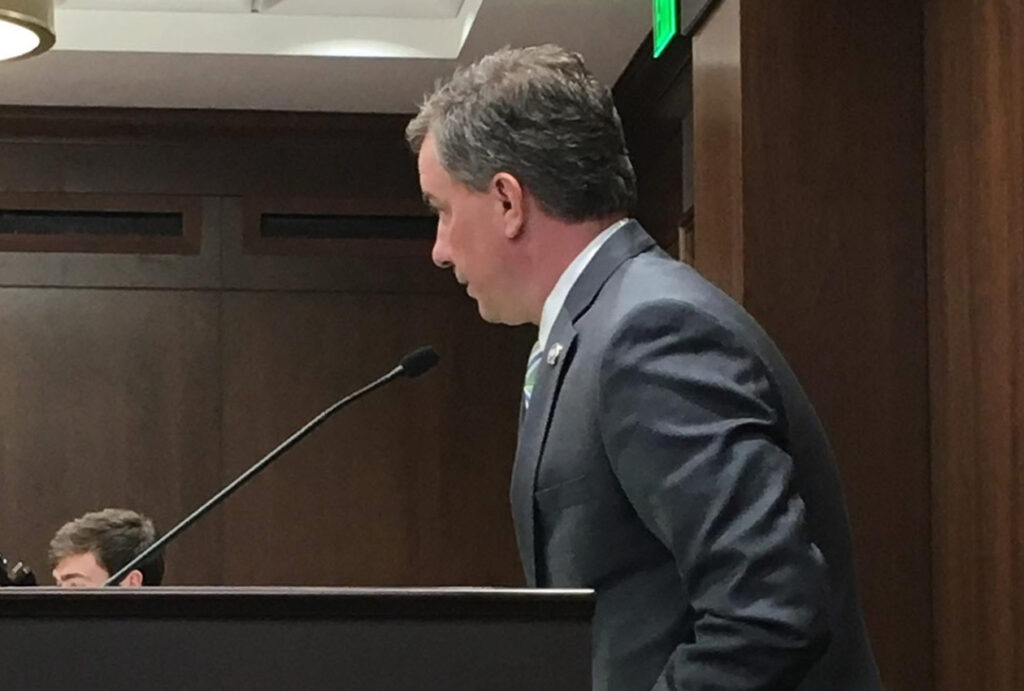
Representative Ron Gant is a Republican member of the Tennessee House of Representatives, representing District 94 since 2016. He is a fifth-generation Tennessean with a professional background in the insurance industry.
By Representative Ron Gant
Read more local news by clicking here.
Stay informed on what’s happening in Hardeman County by subscribing to Hatchie Press e-mail updates.
Do you have community news you’d like to share? E-mail us at news@hatchiepress.com.